
Insulation
Air Sealing vs Insulation (Bay Area): What Works
March 12, 2026
If your home feels drafty, some rooms run hotter or colder than others, or you’re constantly battling dust, you’ve probably heard two recommendations:
-
“Add more insulation.”
-
“Seal air leaks.”
Both can help, but they solve different problems. And doing them in the wrong order can waste money and still leave your home uncomfortable.
This guide explains:
-
Why homes feel drafty (in plain English)
-
What air sealing fixes that insulation can’t
-
When insulation is the right move
-
The best sequence for Bay Area homes: inspect → seal → insulate
-
A simple decision tree to choose the right next step
-
Cost factors and next steps
✅ Book a home comfort assessment (air sealing + insulation)
If you want a clear plan instead of guessing, start with an attic-first assessment.
Book a Comfort Assessment
Why homes feel drafty (simple physics, no cringe)
Drafts are usually caused by air moving through gaps in the building envelope. When outside air can enter and inside air can escape, you get:
-
cold or warm drafts
-
uneven temperatures from room to room
-
HVAC running longer than it should
-
dust movement through small pathways
-
comfort that changes with wind and weather
In many Bay Area homes, the attic is a major zone for air movement because:
-
there are lots of penetrations (lights, wiring, plumbing)
-
attic hatches are rarely well sealed
-
older construction has more small gaps over time
Air leaks: the hidden problem insulation can’t solve alone
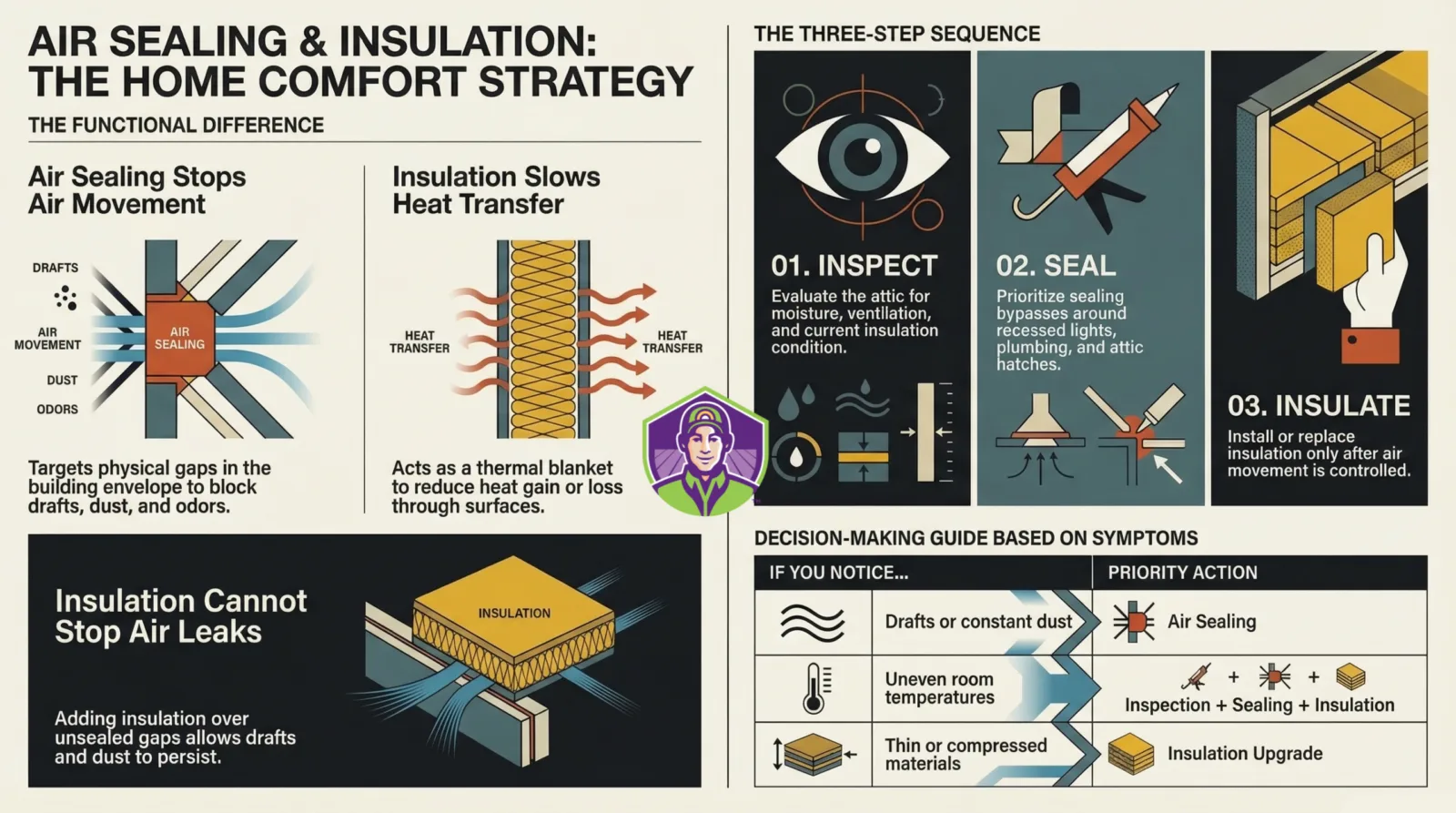
Insulation is designed to slow heat transfer. It does not stop air from moving through gaps.
So if your attic has major bypasses (holes and gaps):
-
adding insulation can help some
-
but you may still feel drafts and uneven temperatures
-
and you can still pull dust and odors through the same pathways
That’s why “just add more insulation” sometimes disappoints people.
Air sealing targets the actual pathways where air moves:
-
gaps around penetrations
-
bypasses around recessed lights
-
attic hatch leakage
-
top-of-wall gaps and transitions (where applicable)
What air sealing usually targets (attic-first approach)
A good air sealing scope focuses on the highest-impact leak points first.
Common attic air leakage points
-
Attic hatch / access door (often a top offender)
-
Plumbing and electrical penetrations through the ceiling plane
-
Recessed lights and ceiling fixtures
-
Fan and duct penetrations
-
Top plate gaps and framing transitions (as applicable)
Air sealing is about careful detailing, not randomly spraying foam everywhere like you’re decorating a cake.
When insulation is the right move (and when it’s wasted)
Insulation upgrades usually make sense when:
-
insulation coverage is thin, uneven, compressed, or missing
-
you have obvious heat gain/loss through the attic
-
you’ve already addressed moisture and ventilation issues
-
you’ve reduced major air leakage paths (or will as part of the project)
Insulation upgrades may be wasted (or underperform) when:
-
moisture problems are unresolved (wet insulation = weak performance)
-
attic ventilation or ducting is wrong (condensation issues repeat)
-
air bypasses are wide open (drafts continue)
If your insulation is old, dirty, compressed, or disturbed, removal and replacement may be the better long-term route.
The best sequence: inspect → seal → insulate
For many Bay Area homes, a practical improvement sequence is:
-
Inspect the attic (moisture, ventilation, insulation condition)
-
Fix obvious issues (ducts venting wrong, signs of leaks/condensation)
-
Air seal major bypasses
-
Add or replace insulation for consistent thermal performance
-
Optional: verify results with basic comfort checks and monitoring
This sequence helps ensure your insulation investment actually performs.
Decision tree: air sealing or insulation first?
Use this quick guide:
Step 1 — Do you feel drafts (especially on windy days)?
-
Yes → air sealing is likely a priority
-
No → go to Step 2
Step 2 — Do you have uneven room temperatures?
-
Yes → often needs both, but start with inspection + sealing
-
No → go to Step 3
Step 3 — Is your attic insulation thin, missing, or compressed?
-
Yes → insulation upgrade likely needed (after sealing/condition checks)
-
No → go to Step 4
Step 4 — Do you notice musty odors or moisture signs in the attic?
-
Yes → address moisture/venting first (then seal/insulate)
-
No → you may benefit from targeted sealing + insulation tune-up
Step 5 — Is dust a constant battle even after cleaning?
-
Yes → air sealing can help reduce pathways for dust movement
-
No → focus on comfort and insulation performance
Will air sealing reduce dust or odors?
Often, it can help. Not by “filtering” air, but by reducing pathways where:
-
attic dust can migrate into living areas
-
air movement carries odors from attic/crawl space zones
If odors originate from contamination or moisture, sealing is not a substitute for cleaning. It’s part of the system approach.
Cost factors (what affects scope and pricing)
Pricing depends on the home and scope, including:
-
attic access difficulty and safety conditions
-
number of penetrations and bypasses
-
whether insulation needs to be moved/removed to seal properly
-
attic moisture/ventilation issues that must be corrected
-
whether you’re doing sealing only or sealing + full insulation upgrade
A scope-based estimate is how you avoid paying for the wrong fix.
Next steps: get a plan that matches your home
-
Attic inspection (conditions + insulation + ventilation)
-
Decide on priorities: sealing, insulation, or both
-
Implement in correct order
-
Confirm improvements (comfort, draft reduction, consistency)
✅ Book a home comfort assessment (air sealing + insulation)
FAQ
Will air sealing reduce dust?
It can help by reducing pathways where attic dust can move into living areas. Results vary by home and how many bypasses are sealed.
Can air sealing help with musty smells?
It may reduce air movement pathways, but it won’t remove the source of odors. If the attic or crawl space has moisture or contamination, cleaning and moisture control are still important.
Do I need both air sealing and insulation?
Many homes benefit from both. A common approach is sealing first, then insulation, so the insulation performs as intended.
How disruptive is air sealing work?
Most air sealing is done in the attic and is typically less disruptive than major renovations, but scope depends on access and conditions.
Does this help with AC performance?
Often, yes. Reducing air leakage and improving insulation can help the home maintain temperature more consistently, which can reduce HVAC workload.
