Bay Area Spray Foam Insulation · Licensed · 13+ Years
Spray Foam Insulation in the San Francisco Bay Area
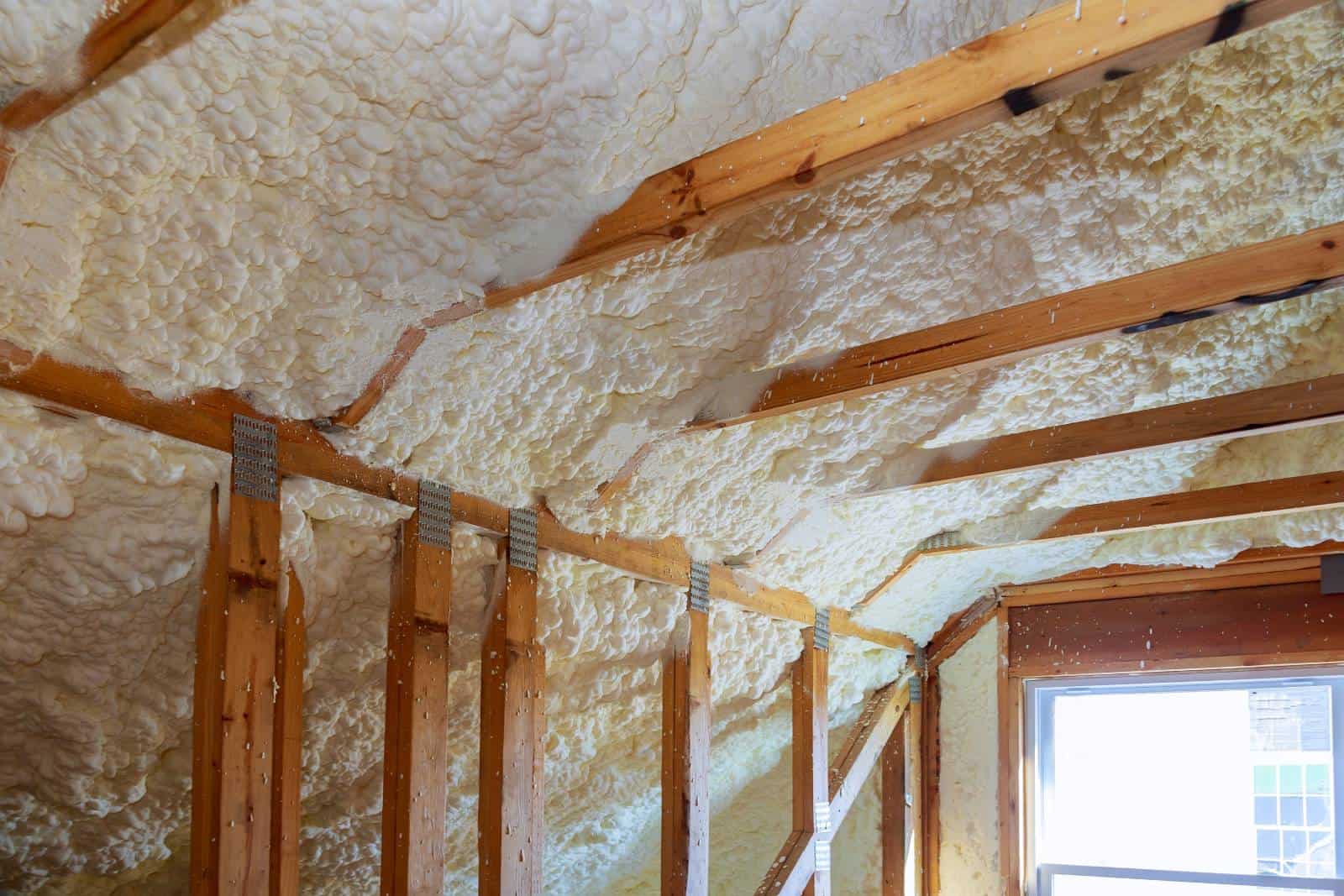
Spray foam does two jobs at once — it expands to fill every gap and air-seals as it insulates, something batts and blown-in can't. The premium pick for air-sealing, tricky spaces, and a high R-value in a thin profile.
Free estimateLicensed (CSLB #1022608)Air-seals + insulates13+ years experience
Free on-site estimate · No pressure · We come to you
★★★★★
“Attic Pros are great especially Jose Olguin. He climbed into my crawl space, took pictures, closed openings- was very thorough in making my crawl space rodent proof. Would call them again and especially ask for Jose Olguin.”
— Gonzalo Sapiz, San Jose, CA
Verified Google Review
★★★★★
“Lugerio and his crew did a great job cleaning our crawl space and Rat proofing it, so we won’t have any more unwanted guests. Thank you Attic Pros”
— Dave Council, San Jose, CA
Verified Google Review
★★★★★
“Jorge did an excellent job of fixing the many gaps in the attic, crawl spaces and exterior vents to prevent rodents from crawling into the attic walls and crawl spaces. I recommend him”
— Neeraja chandupatla, San Jose, CA
Verified Google Review
★★★★★
“Attic Pros are great especially Jose Olguin. He climbed into my crawl space, took pictures, closed openings- was very thorough in making my crawl space rodent proof. Would call them again and especially ask for Jose Olguin.”
— Gonzalo Sapiz, San Jose, CA
Verified Google Review
LICENSED CONTRACTOR
CA License #1022608
SPCB Co. Reg. #9901 (Branch 2)
What It Is
Insulate and Air-Seal in One Step
Spray foam is a liquid that expands on contact, flowing into gaps, cracks, and irregular cavities and then hardening in place. That expansion is what sets it apart: most insulation only slows heat, but spray foam also air-seals as it insulates — closing the leaks that let conditioned air escape and drafts get in. Doing both jobs in one step is why it's the premium choice where air-sealing and coverage matter most.
It comes in two forms — open-cell and closed-cell — with different strengths, and it delivers a high R-value per inch, especially closed-cell. It costs more than a fiberglass batt or cellulose, and it has to be professionally installed, so it's about using it where its air-sealing and reach genuinely pay off — which is exactly what we help you decide.
Air-seals and insulates in one step
Expands to fill gaps and odd shapes
High R-value per inch (esp. closed-cell)
Reaches hard-to-insulate spots
Doesn't settle or sag over time
Open-cell or closed-cell for the job
Two Types
Open-Cell vs Closed-Cell
Spray foam comes in two forms that trade off R-value, moisture behavior, and cost. Here's the honest comparison — and we'll match the right one to your space.
☁️
Open-Cell
Lighter, softer foam that expands a lot — the more economical spray foam.
Pros
More budget-friendly of the two
Expands to fill gaps generously
Good sound dampening
Vapor-permeable — lets assemblies dry
Trade-offs
Lower R-value per inch
Not a moisture/vapor barrier
🧊
Closed-Cell
Dense, rigid foam — the higher-performance (and pricier) option.
Pros
Highest R-value per inch
Acts as a moisture & vapor barrier
Adds structural rigidity
Great for damp or exposed areas
Trade-offs
Costs more than open-cell
Denser — less give
Spray foam isn't always the answer — for open attic floors and standard cavities, a fiberglass batt, cellulose, foam board, or rockwool is often the better, more economical fit. Not sure which your project needs? That's what our free assessment is for.
Spray foam is a premium material that shines where air-sealing and reach matter most — the spots a standard batt can't handle well.
🌬️
Air leaks & drafts
If your home is drafty or hard to keep comfortable, spray foam's air-sealing closes the leaks that other insulation leaves open.
🧩
Irregular or tight cavities
In odd-shaped or obstructed spaces where batts leave gaps, spray foam expands to fill every void completely.
🧱
Rim joists & hard-to-reach spots
Rim joists, tight attic corners, and awkward framing are classic spray-foam jobs — it seals and insulates where access is poor.
📐
High R in a thin space
Where you can't add much depth, closed-cell's high R-value per inch packs more performance into a shallow cavity.
💧
Damp or exposed areas
Closed-cell resists moisture and acts as a vapor barrier, so it holds up in crawl spaces and other damp-prone spots.
🏠
Cathedral ceilings & unvented attics
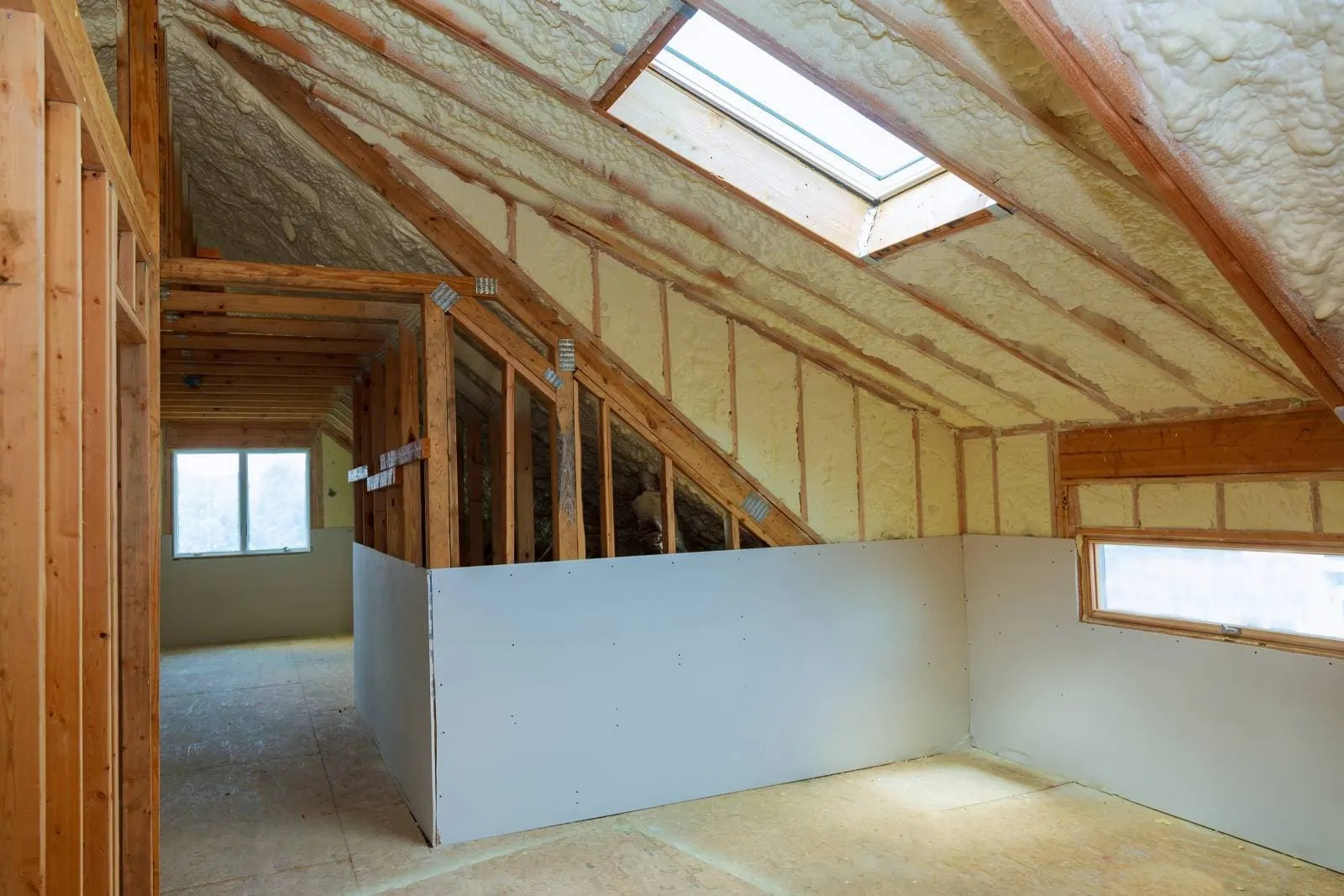
For vaulted assemblies or sealing an attic at the roofline, spray foam does the air-sealing and insulating together.
Not sure spray foam is the right material — or whether open-cell or closed-cell fits your space? Book a free assessment and we'll give you an honest recommendation for your home.
How We Work
Our Spray Foam Installation Process
Spray foam is a professionally applied product that has to be mixed, sprayed, and cured correctly. Here's how we handle every install.
1
🔎
Free assessment
We inspect the space and your goals — air-sealing, moisture, R-value — and confirm whether spray foam is the right call or a cavity material would do.
2
📐
Select open- or closed-cell
We recommend open-cell or closed-cell and the right thickness to hit your air-sealing, moisture, and R-value targets.
3
🛡️
Prep & protect
We mask and protect the surrounding area, and cover anything that shouldn't be sprayed, so the application is clean and controlled.
4
💨
Spray & let it cure
We apply the foam evenly so it expands and seals, then let it cure properly — the space is kept clear until it's safe.
5
✅
Trim, verify & clean up
We trim any excess, confirm full, even coverage and a proper seal, clean up completely, and walk you through the finished job.
Free assessmentLicensed (CSLB #1022608)Even coverage & full seal
Why Attic Pros
The Bay Area's Trusted Insulation Installers
For over 13 years, Bay Area homeowners and businesses have trusted us for insulation — because we recommend the right material for the job (not just the priciest), install it properly, and stand behind our work.
Licensed contractor (CSLB Lic. #1022608)
SPCB-registered for pest-related work (Co. Reg. #9901)
Diamond Certified & Angi Super Service Award winner
Independently reviewed — verified Google ratings
Free, no-obligation on-site assessment
Local team with 13+ years in Bay Area homes
Real Customers, Real Results
Trusted by Bay Area Homeowners
4.8
★★★★★
Based on 1,900+ verified Google reviews — trusted for insulation & home services across the Bay Area
Google Review
★★★★★
UPDATE: I really appreciate the company followed up after my concerns were raised. They took accountability for what happened, handled the situation professionally, and offered to fix all the issues. Their responsiveness and willingness to make things right completely changed my impression, and I’m happy to update my review to 4 stars.
They ultimately completed the job, but the overall experience was far from hassle-free. During the process, they damaged our ceiling and later repaired it, though the result was not fully satisfactory.
There were multiple mistakes along the way, both in the actual work and in billing, which meant we had to stay very involved to ensure nothing was missed. Communication was also a challenge. Our consultant, Tom, was not as responsive as expected, especially given how busy schedules can be in the Bay Area. We often had to follow up multiple times to get updates or have issues addressed.
Overall, while the job was eventually finished, the process required more oversight and effort than it should have. If I were to go through this again, I would choose a different company.
Daniel Yahyazadeh
6 months ago
Google Review
★★★★★
We recently had our attic and under our house taken care of and Attic Pros did a great job. Shout out to Amilcar and Walter. Thank You.
Ryan E.
recently
Google Review
★★★★★
Shah turned my experience around from a bad one to a good one in the very beginning. Aleksandra at the office answered and addressed all my questions and concerns very thoroughly. Jose who did the rodent proofing, answered all my questions and took his time going through the crawlspace and making sure he found and covered all potential access points for rodents into the crawlspace. He was very patient and thorough.
A Clements
2 weeks ago
Google Review
★★★★★
Just had a great inspection from Tom. Very informative and helpful!
Grace Ghiselli
3 weeks ago
Google Review
★★★★★
Dennis is extremely professional, communicated all that was happening, explained where the critters were invading and did a very thorough job sealing the house, along with his helper. Thank you!
Dede Wynne
3 weeks ago
Google Review
★★★★★
Denis, German,& Alexander were great. Very professional, thorough and customer oriented. I would recommend them for any attic, crawl space, HVAC, insulation, rodent & sub pump work. They were nice, hard working & non intrusive.
Frank Moro
3 weeks ago
QUESTIONS, ANSWERED
Frequently Asked Questions
Straight answers to what people actually ask about spray foam — the two types, air-sealing, safety, and how it compares. Still weighing your options? Our team is happy to help.
It's a liquid that's sprayed into place and expands on contact, filling gaps and cavities and then hardening. As it expands it both insulates and air-seals — closing the small leaks that let conditioned air escape — so it does two jobs in a single step, which is its biggest advantage over traditional insulation.
Open-cell is lighter, softer, and more economical; it expands a lot and dampens sound well, but has a lower R-value per inch and isn't a moisture barrier. Closed-cell is dense and rigid with the highest R-value per inch, acts as a moisture and vapor barrier, and even adds some structural rigidity — but it costs more. We recommend the right one based on your space and goals.
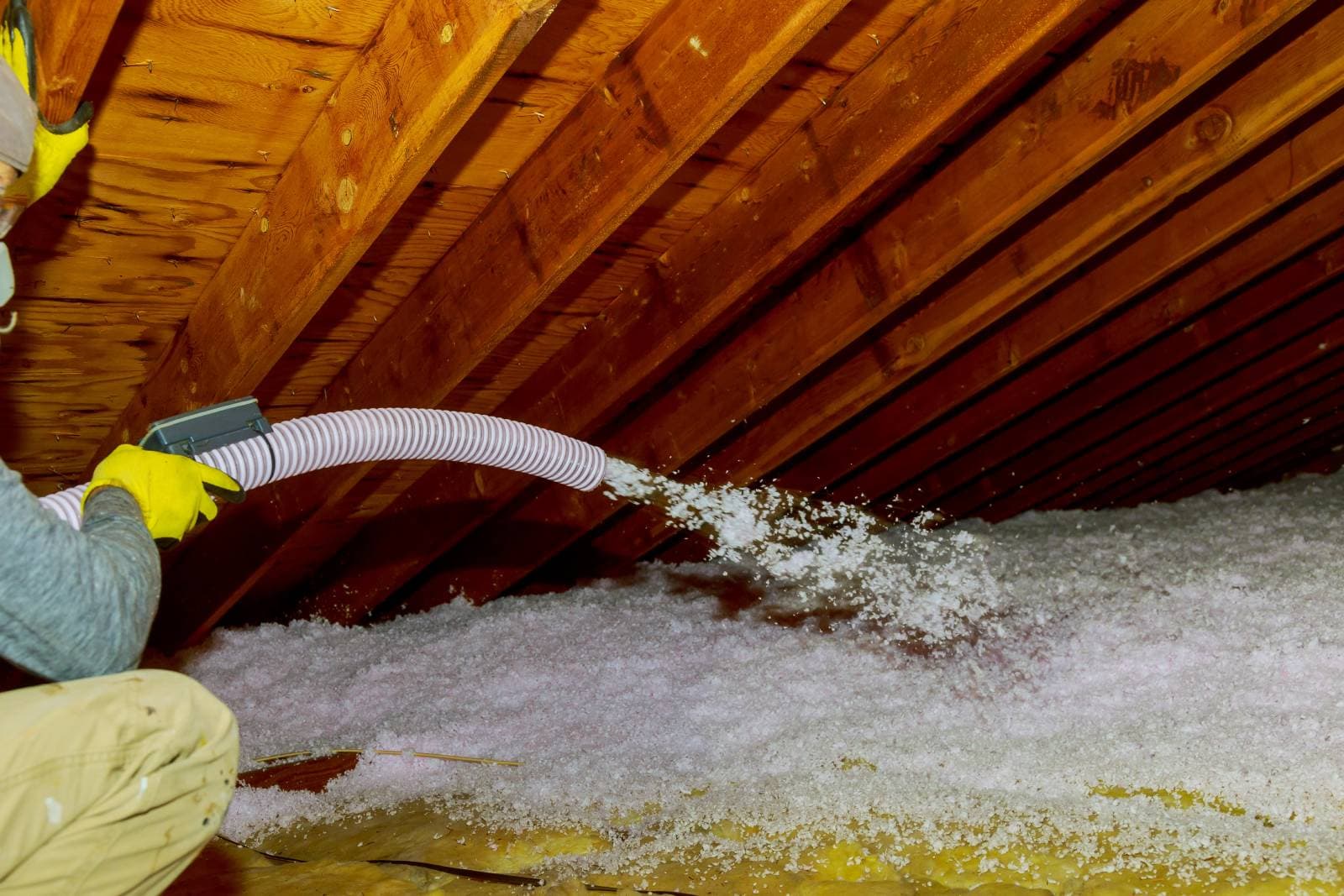
The big difference is air-sealing. Batt and blown-in slow heat but don't seal air leaks, so drafts and air movement still sneak through. Spray foam expands to seal those leaks as it insulates, and it has a higher R-value per inch. It costs more and must be professionally installed, so it's best where air-sealing and reach really matter. See our batt, cellulose, foam board, and rockwool pages to compare the alternatives.
It's among the highest per inch of common insulations. Open-cell is roughly R-3.5 to R-3.9 per inch, while closed-cell is higher — around R-6 to R-7 per inch — so it delivers strong performance in a thin layer, especially closed-cell. Your total R-value depends on the type and thickness applied, which we size to your target.
Common spots include rim joists, hard-to-reach attic and crawl-space areas, irregular or obstructed cavities, cathedral ceilings, and sealing an attic at the roofline. Anywhere air-sealing, moisture resistance, or a high R in a thin profile is the priority is where spray foam tends to earn its cost.
Once it's properly installed and fully cured, spray foam is inert and safe. During application it's a chemical product that requires trained installers, protective equipment, and ventilation, and the area is kept clear until it has cured — which is exactly why it should be installed by professionals rather than as a DIY job. We handle the application and curing correctly.
It depends on the job. Because it air-seals as it insulates and delivers a high R-value per inch, spray foam can be very effective where air leakage or tricky access is the real problem — and that value shows up in comfort and reduced drafts. For simple open cavities, a cheaper batt or blown-in is often the smarter spend. We'll give you an honest read on whether it's worth it for your space.
Most residential spray foam jobs are completed in a single visit, and the foam cures within hours. We keep the area clear during application and curing, and let you know exactly when it's ready to use again. We'll give you a clear timeline with your estimate.
Tell us about your project — air leaks, a tricky space, or moisture — and we'll assess it, recommend whether spray foam (and which type) is the right fit, and give you a clear, no-pressure estimate.