
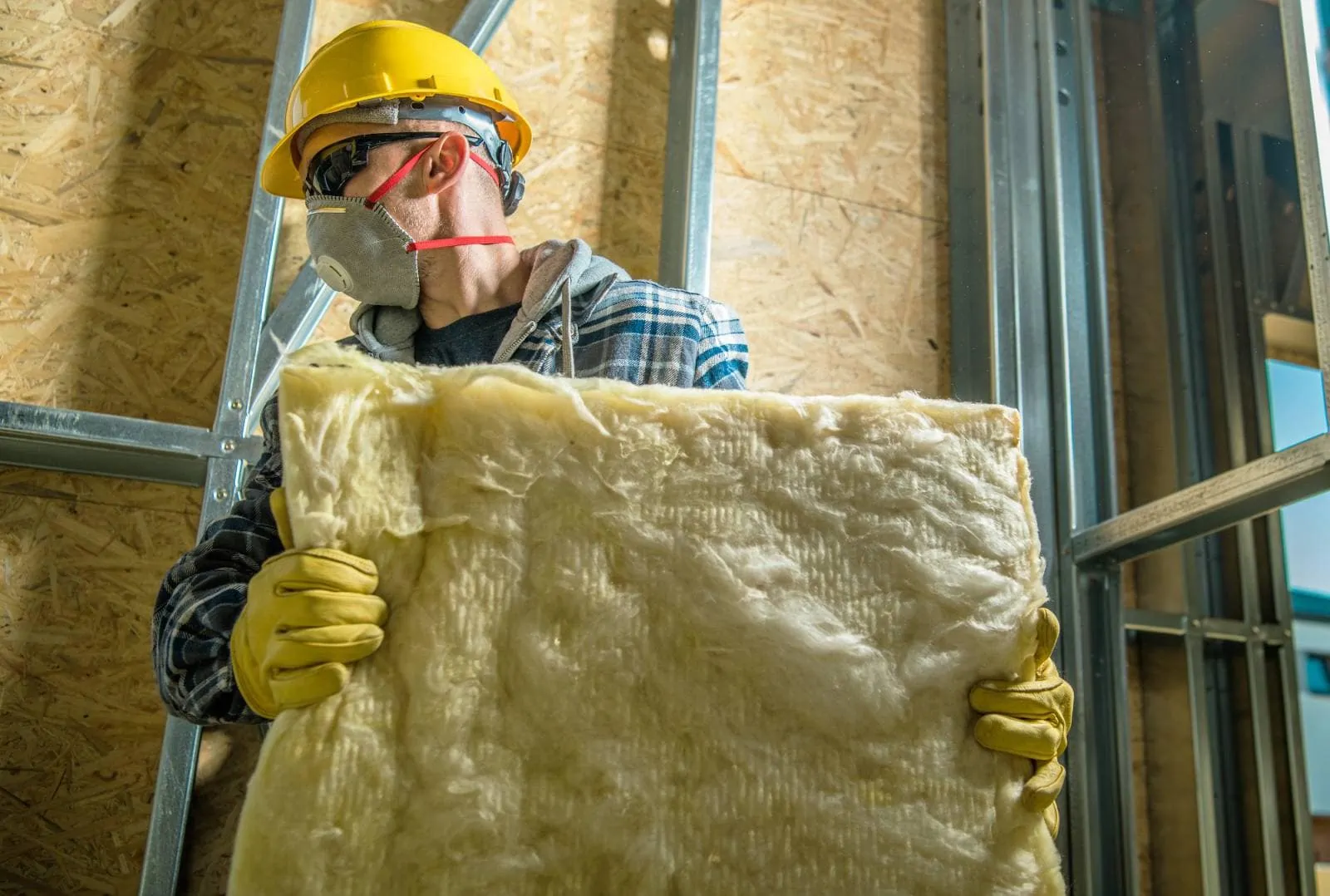
Continuous roll format
Supplied as one long blanket and cut to length on site, roll insulation covers long joist bays and walls with fewer seams than pre-cut batts.
Fiberglass roll — the familiar blanket insulation rolled out and cut to length — covers long attic bays and walls fast, with fewer seams than pre-cut batts and dependable R-value by thickness.
Free on-site estimate · No pressure · We come to you
What It Is
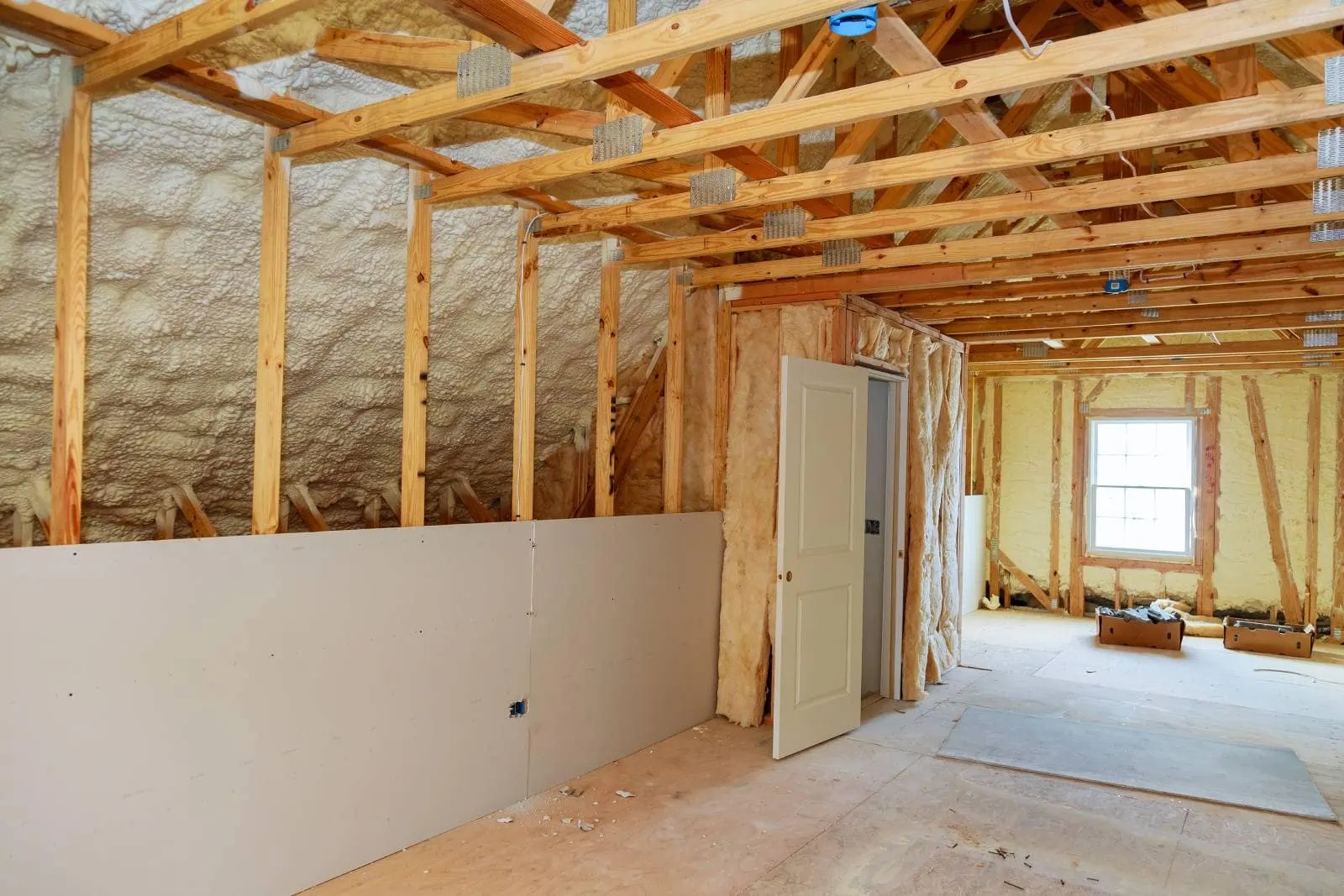
Fiberglass roll insulation is the classic insulation you picture — soft matting spun from fine glass fibers, supplied as a long, continuous blanket roll that we roll out and cut to length on site. It's the same fiberglass used in the widely installed batt format, just supplied as a continuous roll instead of pre-cut pieces — and that format is the key difference between the two.
The roll format is its advantage: across long, evenly framed runs — an open attic floor, long joist bays, or tall walls — a continuous blanket lays in fast with fewer seams than butting pre-cut batts end to end. It's lightweight, non-combustible, one of the most economical insulations there is, and delivers dependable, code-level R-value by thickness. Where the space is short, chopped-up, or irregular, pre-cut batts or a blown-in fill are the better call — which is what we help you sort out.
Why Fiberglass Roll
The properties that make fiberglass roll a staple for long, open runs — inherent to the material and the roll format.
Supplied as one long blanket and cut to length on site, roll insulation covers long joist bays and walls with fewer seams than pre-cut batts.
Fiberglass is made from fine spun-glass fibers — light to handle and quick to lay in across large, open areas.
Glass fiber doesn't burn, so fiberglass roll adds a measure of fire safety alongside its thermal performance.
Rolls come in set thicknesses that deliver standard R-values for walls, floors, and attics, so it's easy to hit your target.
Fiberglass is among the most budget-friendly insulations, which is a big reason roll and batt fiberglass are so widely used.
Rolls come faced with a built-in vapor retarder (kraft or foil) for the right assemblies, or unfaced for others — we use the correct type.
Is It Right for You?
Roll fiberglass shines in specific spaces — mostly long, open, evenly framed runs. Here's when it's the pick, and when a batt or blown-in fits better.
Long, even joist bays
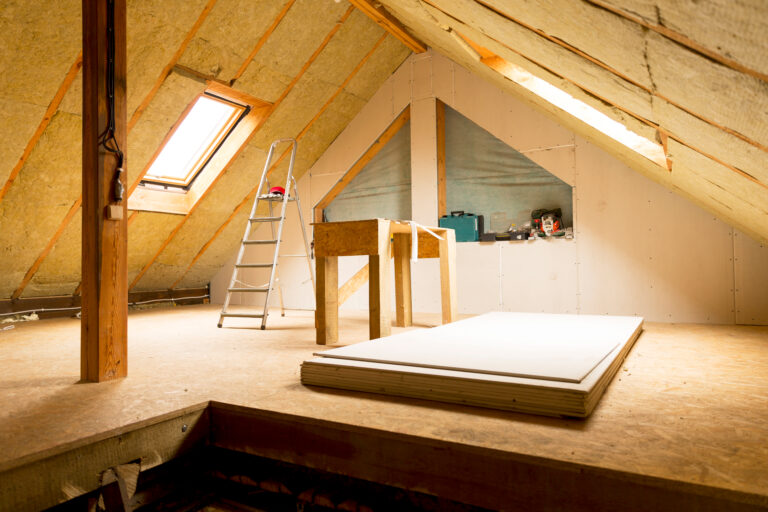
Open attic floors and long, standard-spaced joist bays are exactly where a continuous roll lays in fast and clean.
Tall or long walls
For long wall runs in open framing, rolling out a continuous blanket means fewer seams than cutting and butting batts.
Budget-friendly upgrade
When cost matters and the space is open and regular, fiberglass roll delivers solid R-value for less than most alternatives.
You're weighing roll vs batt
Roll and batt are the same fiberglass in different formats — roll suits long continuous runs, while pre-cut batts suit shorter standard bays and offer mineral-wool options.
Few obstructions
Roll performs best where there's little wiring, plumbing, or irregular framing to cut around — otherwise a blown-in fill covers better.
New construction / open framing
Before the walls close up, rolling in fiberglass is a fast, economical way to hit your R-value target.
How We Work
With roll fiberglass, a snug, gap-free fit over clean, well-prepped runs is what makes it perform. Here's how we handle every install.
We inspect the space, check the framing and runs and your current R-value, and confirm whether fiberglass roll is the right fit or a batt or blown-in option would perform better.
We recommend the right roll thickness to hit your target R-value, and faced or unfaced to suit the assembly and its vapor needs.
If existing insulation is old, compressed, or contaminated, we remove and haul it away so the new roll sits on a clean surface.
We roll the blanket out along the bays, cut it to length, and set it snugly and gap-free around wiring and boxes — not compressed — so it actually performs.
We confirm full, even coverage at the target R-value, clean up completely, and walk you through the finished job.
Why Attic Pros
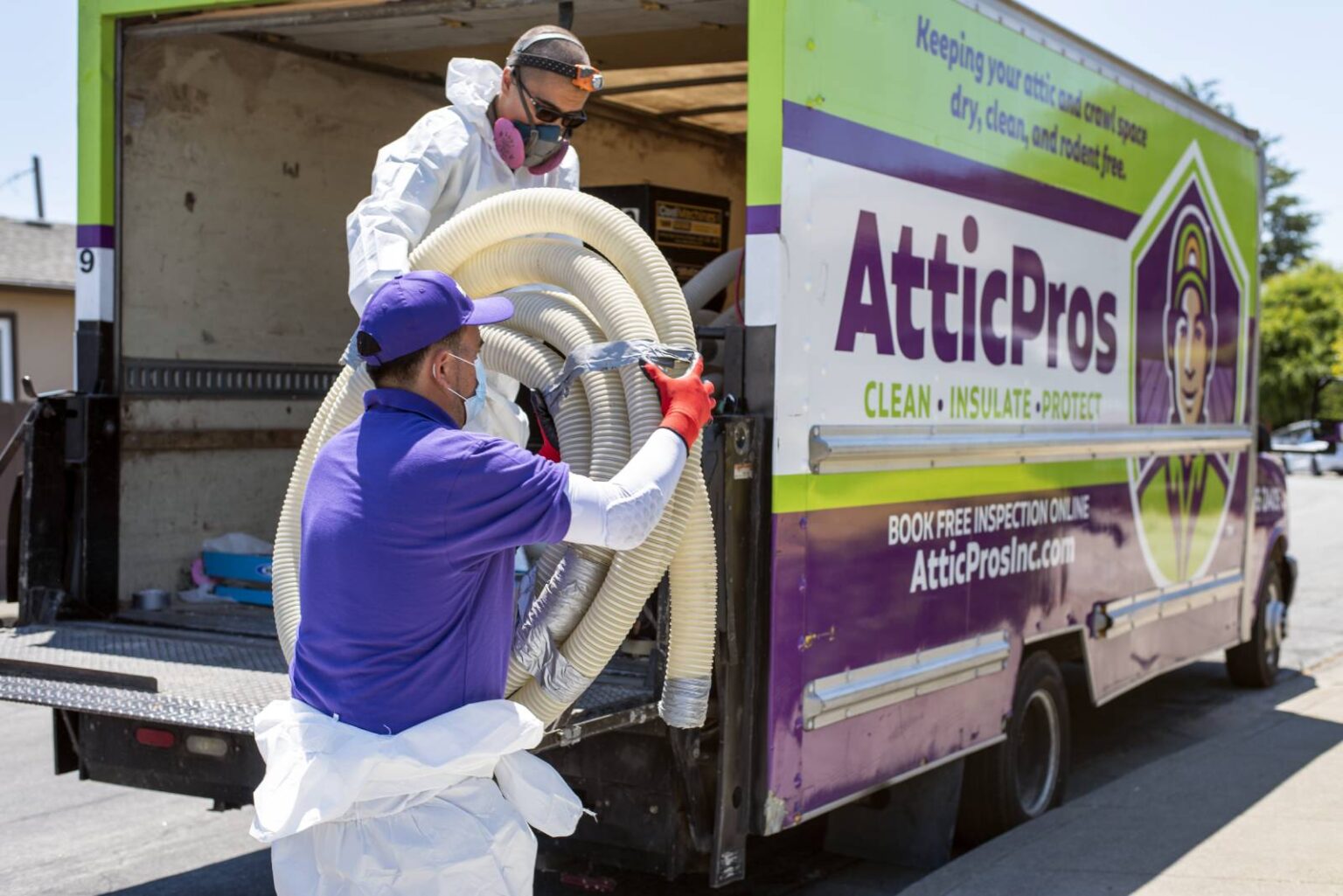
For over 13 years, Bay Area homeowners and businesses have trusted us for attic and crawl-space insulation — because we recommend the right material and format for the space, install it properly, and stand behind our work.
Real Customers, Real Results
Shah turned my experience around from a bad one to a good one in the very beginning. Aleksandra at the office answered and addressed all my questions and concerns very thoroughly. Jose who did the rodent proofing, answered all my questions and took his time going through the crawlspace and making sure he found and covered all potential access points for rodents into the crawlspace. He was very patient and thorough.

Just had a great inspection from Tom. Very informative and helpful!

Denis, German,& Alexander were great. Very professional, thorough and customer oriented. I would recommend them for any attic, crawl space, HVAC, insulation, rodent & sub pump work. They were nice, hard working & non intrusive.

Tom was professional, knowledgeable and efficient. I got the quote fast and I look forward to Attic Pros doing the work.

We had Samim come out to our house. He was so kind, fair, and professional, and put me at ease following an exorbitant price gouging experience. I highly recommend Attic Pros and if you can, ask for Samim. You will be happy with the quality of their work as well.

Tom was a great help Thanks again tom for make sure this all goes smoothly G

QUESTIONS, ANSWERED
Straight answers to what people actually ask about fiberglass roll — how it differs from batts, its R-value, and when it's the right pick. Still weighing your options? Our team is happy to help.
Talk to our team — we're here to help.
(800) 543-0382Explore More
Ready when you are
Tell us about your attic, walls, or crawl space and we'll assess the space, compare roll against batt and blown-in, and give you a clear, no-pressure written estimate.
Accessibility Tools