
When to Remove Old Attic Insulation: Dust, Odors, Moisture Damage, and Performance Loss (Bay Area Guide)
Most homeowners only think about attic insulation when something feels wrong: the house won’t hold temperature, rooms feel uneven, dust is constant, or there’s a lingering musty smell that shows up during wet weather.
Here’s the uncomfortable truth: old insulation doesn’t always fail dramatically. It usually degrades quietly through compression, disturbance, dust loading, and occasional moisture exposure. At some point, “just add more” stops being the smart move.
This guide covers:
-
What “past its prime” insulation looks like
-
Common Bay Area causes (moisture, ventilation, age, remodels)
-
When removal is recommended vs when topping off is enough
-
What professional insulation removal typically includes
-
The correct sequence for best results: inspect → air seal → insulate
-
Cost factors and next steps
✅ Get an insulation removal & replacement estimate
If your insulation is dirty, compressed, or odor-prone, start with a scope-based assessment.
Get an Estimate
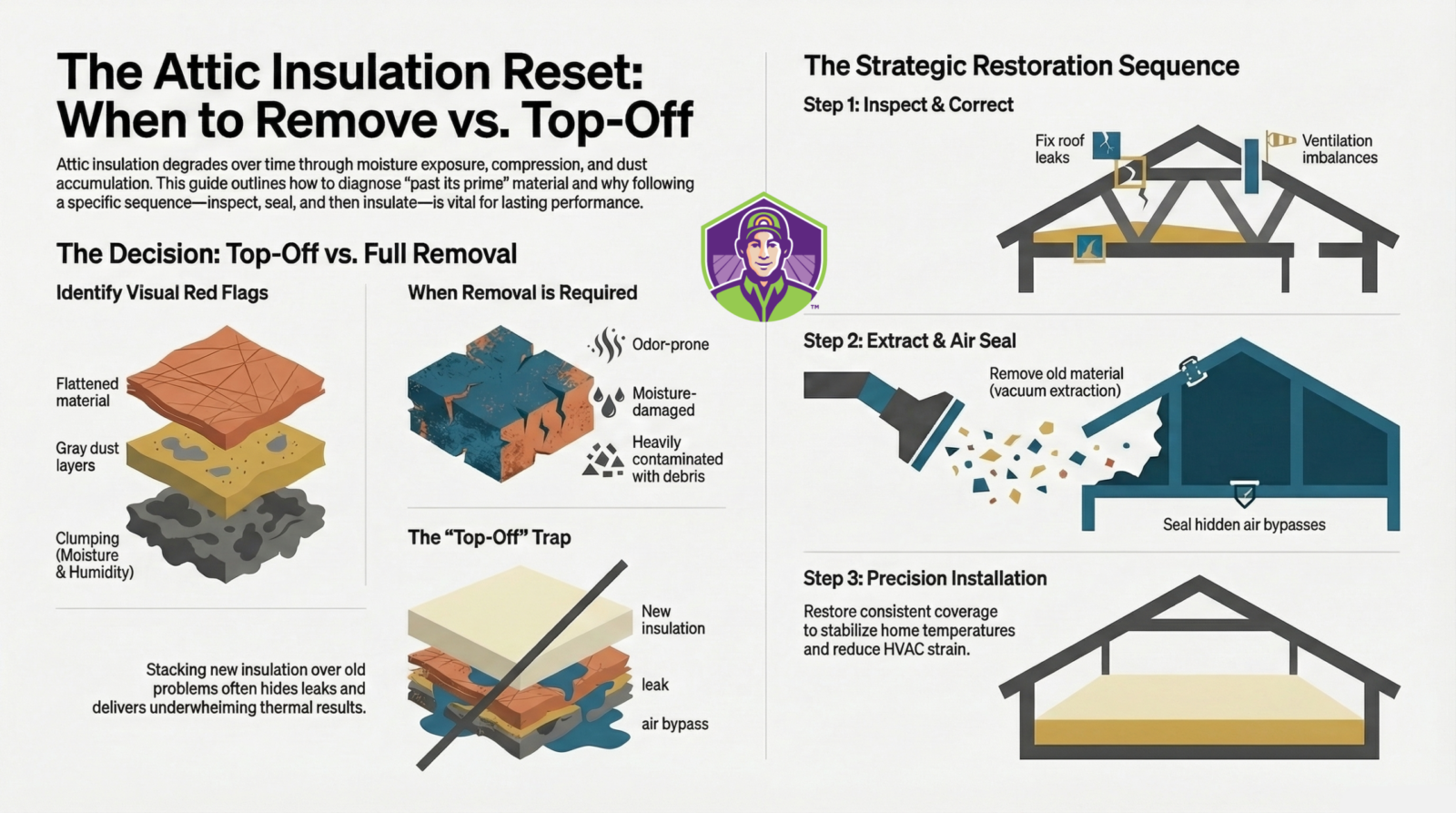
What “bad insulation” looks like (no lab tests required)
You don’t need a microscope to spot insulation that’s underperforming. Look for:
-
Compression or flattening (it should be fluffy, not packed down)
-
Uneven coverage (thin spots, gaps, “paths” where people have walked)
-
Dusty or gray surface layers (often indicates air movement and dust loading)
-
Clumping or matting (sometimes from humidity exposure)
-
Localized staining (old leak patterns, condensation zones)
-
Persistent attic odors that return during damp seasons
None of these automatically mean “rip it all out today.” But they are strong signals to at least assess whether removal makes sense.
Common causes in Bay Area homes
Bay Area homes often have a mix of conditions that quietly wear insulation down over years:
Moisture exposure (seasonal, not always dramatic)
Even mild moisture events can impact insulation performance over time:
-
small roof leaks during heavy rain
-
condensation from ventilation imbalance
-
ducting issues (bathroom fans, loose ducts)
-
coastal fog and humidity patterns in some microclimates
Remodeling and “attic traffic”
Every time someone goes into the attic:
-
insulation gets compressed
-
coverage becomes uneven
-
gaps around penetrations get disturbed
-
dust gets redistributed
Ventilation and air leakage
If air moves through bypasses, insulation can load with dust and lose effectiveness. Air sealing can reduce those pathways, but severely degraded insulation may still need replacement.
Comfort and air quality (careful, realistic language)
Old insulation can:
-
contribute to odors if it’s been exposed to moisture or has accumulated dust
-
increase irritation for some people when disturbed (especially in spring cleaning season)
-
reduce comfort by allowing bigger temperature swings
-
make HVAC work harder to maintain set temperature
This isn’t meant to alarm anyone. It’s just how materials behave when they sit in a dusty, sometimes humid space for many years.
Remove old insulation or just add more?
This is the decision that saves (or wastes) money.
Topping off may be enough if:
-
insulation is generally clean and dry
-
coverage is mostly even
-
there are no recurring attic odors
-
there are no moisture patterns or damp zones
-
the attic has been inspected and ventilation/ducting looks reasonable
Removal is often recommended if:
-
insulation is compressed, dirty, or heavily uneven
-
you see signs of repeated moisture exposure (damp zones, persistent musty smell)
-
insulation is clumped or matted
-
you want to air seal properly but insulation is too disturbed to work around effectively
-
you want a true “reset” for comfort and performance
A common mistake is stacking new insulation on top of problems. It can hide issues and deliver underwhelming results.
What professional insulation removal typically includes
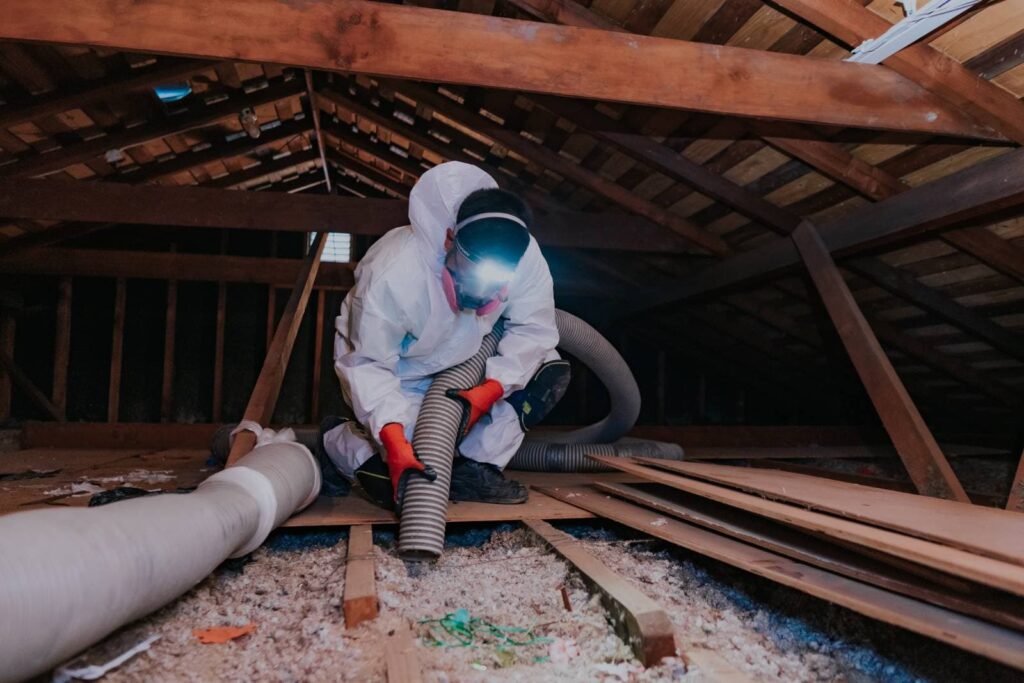
Professional removal is designed to remove old material efficiently while minimizing mess.
Typical workflow
-
Inspection and scope definition
-
verify moisture/ventilation issues first
-
-
Containment and protection
-
keeping debris and dust controlled
-
-
Vacuum-based insulation removal
-
specialized equipment for efficient extraction
-
-
Disposal and cleanup
-
Optional: attic cleaning if needed (dust/debris management)
-
Then: air sealing and preparation for new insulation
The best order for real results: inspect → seal → insulate
If you want the upgrade to actually work, the sequence matters:
-
Inspect attic conditions (moisture, ventilation, ducting, insulation status)
-
Correct issues that cause moisture or air movement
-
Air seal major bypasses (attic hatch, penetrations, transitions)
-
Install new insulation to restore consistent coverage and performance
This prevents “new insulation on top of old problems.”
Cost factors (what affects scope and pricing)
Removal and replacement scope varies based on:
-
attic size and access
-
insulation depth/type and volume
-
debris level and disposal needs
-
whether removal is full or partial
-
whether air sealing is included
-
attic conditions (moisture/ventilation issues that must be addressed first)
A professional assessment prevents paying for the wrong approach (or doing half a fix twice).
Next steps (simple plan)
-
Schedule an attic assessment
-
Decide whether top-off or removal is appropriate
-
If removal is needed: remove → clean → air seal → insulate
-
Verify coverage and address any remaining comfort issues
✅ Get an insulation removal & replacement estimate
Get an Estimate
FAQ
Can old insulation cause odors?
It can. Odors often show up when insulation has been exposed to moisture over time or has accumulated heavy dust. The solution depends on the source and extent.
Do I need removal or can I just add more insulation on top?
If insulation is dry, clean, and mostly even, topping off may work. If it’s compressed, dirty, odor-prone, or moisture-affected, removal is often the better reset.
What happens if insulation got wet?
Wet insulation usually underperforms and can clump or mat. The best next step is an inspection to determine whether the moisture source is resolved and whether replacement is necessary.
How messy is insulation removal?
Professional removal is designed to be controlled, often using vacuum systems and containment practices. Scope and access conditions affect the process.
Should I air seal before installing new insulation?
Often yes. Air sealing first helps insulation perform better and can reduce drafts and dust pathways.